The right components make the difference between a conversion and a transformation. Here is what goes into every Silent Classics build.
The motor is the soul of an EV conversion. We use AC permanent magnet and AC induction motors sourced from proven automotive suppliers. These are not repurposed industrial units; they are purpose-built for vehicles and deliver the kind of smooth, controllable power that makes a classic car feel alive in a way a combustion engine never could.
Depending on your goals, we match the motor to the character of your car. A lightweight Mustang might receive a compact, high-revving unit for sharp throttle response. A Land Rover Defender might call for a torque-dense motor paired with the original transfer case for low-range crawling. A classic pickup benefits from a motor that balances towing capability with everyday drivability.
Our motors typically produce between 100 and 300 horsepower, with peak torque available from zero RPM. During the design and engineering phase, we select and configure the motor specifically for your vehicle's weight, intended use, and performance expectations. Visit our pricing page to see how motor selection affects each build tier.
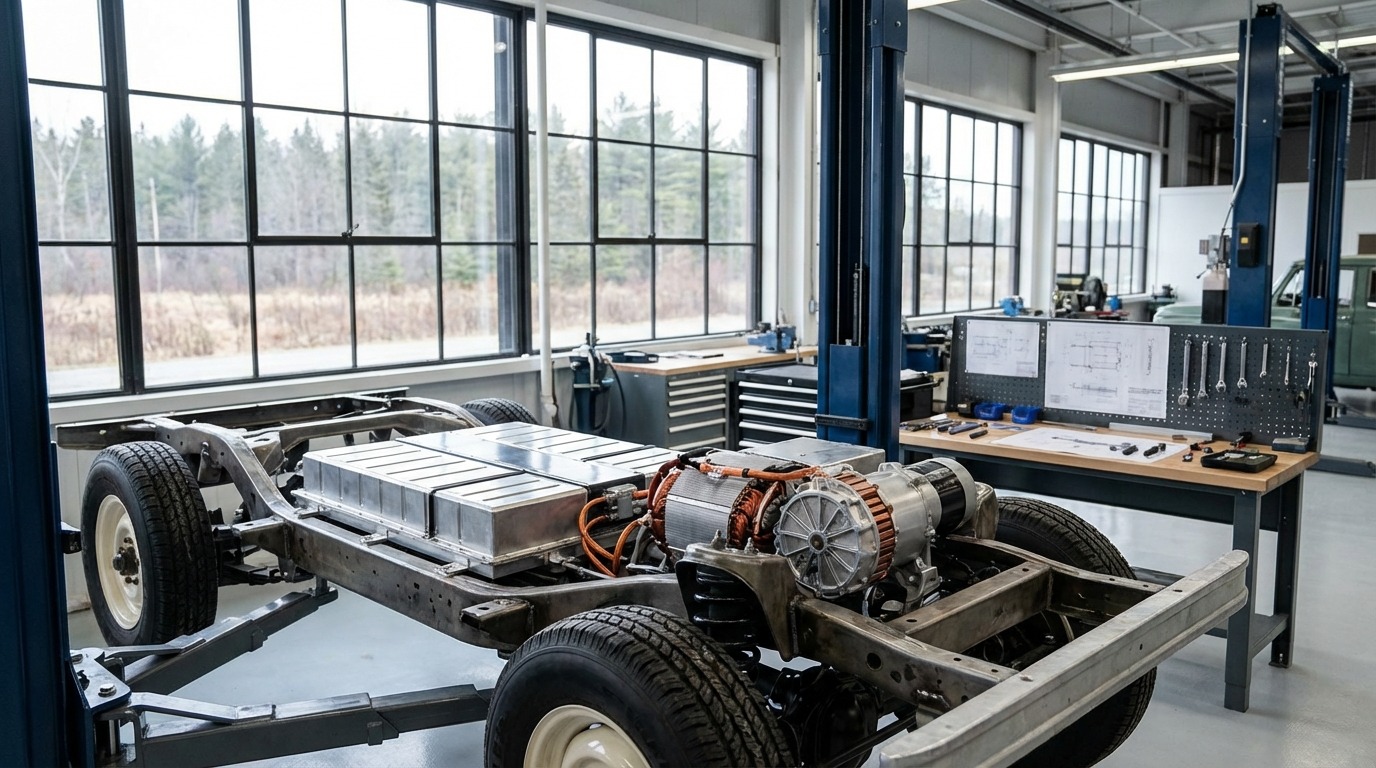
We build our battery packs using lithium iron phosphate (LFP) and nickel manganese cobalt (NMC) cells, depending on the priorities of the build. LFP cells offer exceptional longevity and thermal stability, making them ideal for daily-driven conversions. NMC cells pack more energy into less space, which is valuable when working within the tight confines of a vintage chassis.
Each pack is designed in-house with a custom battery management system (BMS) that monitors cell voltages, temperatures, and state of charge in real time. The BMS ensures safe operation and maximizes the lifespan of the pack, which we design to last well over a decade of regular driving.
Pack sizes typically range from 30 kWh to 80 kWh, depending on the vehicle and the range you need. During your consultation, we will help you find the right balance between range, weight, and cost. For a complete breakdown of what different battery sizes mean for your budget, see our pricing guide. Have specific questions about battery chemistry or lifespan? Our FAQ covers the most common ones.

Range depends on battery size, vehicle weight, driving style, and terrain, but most of our conversions deliver between 80 and 200 miles on a full charge. For the majority of classic car owners, who drive their cars on weekends and for special occasions, that is more than enough for a full day of driving.
Every build includes an onboard charger that connects to a standard Level 2 home charging station, allowing you to charge overnight and wake up to a full battery. For builds in our Performance and Concours tiers, we also offer DC fast charging capability, which can bring the battery from 20% to 80% in under an hour at a public fast charger.
Curious about how this compares to the fuel costs and range of a traditional engine? Our gas vs electric comparison lays it all out. For model-specific range estimates, visit the Mustang, Land Rover, or pickup truck conversion pages.
Start Your Build
A great conversion is about more than the motor and battery. These are the systems that make the driving experience feel complete and factory-integrated.
The inverter converts DC battery power to AC for the motor, while the controller manages throttle mapping, regenerative braking intensity, and power delivery. Together, they determine how the car feels to drive. We calibrate both during the testing and calibration phase to match the character of your specific vehicle.
Batteries and motors generate heat, and managing it well is critical to performance and longevity. We install liquid cooling loops for the battery pack and motor, with an electric pump and radiator sized to the thermal demands of the build. This keeps everything operating within its optimal temperature window, even during spirited driving or hot weather. Our full services list covers all the ancillary work involved.
We believe the interior should remain true to the era of the car. Wherever possible, we repurpose original gauge housings and instrument clusters, fitting them with new senders that display battery state of charge, motor temperature, and power output through the original dials. For builds that call for it, we can also integrate a discreet modern display that blends with the period-correct interior. Browse our builds gallery to see examples of how we handle instrumentation across different vehicles.
Selecting good components is only half the job. The real craft is in the integration: making sure the motor, batteries, inverter, cooling, and ancillary systems all work together as a unified, reliable drivetrain that feels like it belongs in the car.
That is why our six-step process dedicates significant time to engineering and testing. Every wiring harness is built to automotive standards. Every mounting bracket is designed for the specific chassis. And every build goes through rigorous road testing before delivery.
The result is a car that does not feel like a project or a prototype. It feels finished. It feels like it was always meant to be this way. Learn more about why owners are choosing to convert, or explore the practical advantages of electric over gas.

Every build starts with understanding what you need. Tell us about your car and we will recommend the right technology for your goals.