Conversions
EV ConversionsOur ProcessTechnologyPricingAll ServicesOur Builds
Learn
Why Convert?Gas vs ElectricFAQConvert a MustangConvert a Land RoverConvert a Pickup Truck
Company
AboutContact Start Your Build
Your Questions, Answered

Frequently Asked Questions

Everything you need to know about converting a classic car to electric, from cost and range to timeline and safety.

The Basics

Understanding EV Conversions

Whether you are exploring the idea for the first time or ready to move forward, these are the questions we hear most often. For a deeper look at the case for going electric, visit our Why Convert? page or review the gas vs electric comparison.

An EV conversion replaces a classic car's internal combustion engine, transmission, fuel system, and exhaust with a modern electric drivetrain. The result is a vehicle that looks and feels exactly as it did when it left the factory, but drives with the quiet refinement and instant responsiveness of an electric motor. The exterior, interior, and character of the car remain untouched. Only what lies beneath changes.

At Silent Classics, every EV conversion is engineered around the specific chassis, weight distribution, and personality of your car. We do not use off-the-shelf kits. Each build is designed from the ground up to deliver a result that feels factory-original.

In most cases, yes. We design our conversions with reversibility in mind. Custom adapter plates and mounting systems are used instead of permanently altering the chassis or body structure. The original engine, transmission, and associated components can be stored and reinstalled in the future if desired.

This approach reflects our commitment to respecting the heritage of every vehicle we work on. You can learn more about our standards and philosophy on our About page. Reversibility is one of the principles that separates a premium conversion from a hack job.

Range depends on the battery pack size, vehicle weight, driving style, terrain, and climate. As a general guide, our three pricing tiers correspond to different range levels:

Essentials tier: 80 to 120 miles with a 30 to 40 kWh battery pack.
Performance tier: 120 to 180 miles with a 50 to 65 kWh battery pack.
Concours tier: 150 to 200+ miles with a 65 to 80+ kWh battery pack.

For most classic car owners, 120 to 150 miles covers the vast majority of real-world driving. Weekend cruises, shows, errands, and spirited back-road drives are all well within range. Visit our technology page for details on the battery systems, thermal management, and charging hardware we use to maximize every mile.

Conversions range from $25,000 to $80,000 or more, depending on the motor, battery capacity, vehicle condition, and level of customization. We offer three tiers to accommodate different goals and budgets:

Essentials: $25,000 to $40,000. A clean, reliable electric conversion with proven components.
Performance: $40,000 to $60,000. More power, more range, and refined details.
Concours: $60,000 to $80,000+. Maximum performance and bespoke craftsmanship.

Our pricing guide breaks down exactly what is included at each level, what affects the final number, and why an EV conversion is a sound long-term investment. We are transparent about costs from day one. Start your build to get a personalized estimate.

A typical conversion takes 8 to 16 weeks from the moment your car arrives at our workshop to the day you drive it home. Essentials builds tend to be on the shorter end, while Concours-level builds with custom fabrication, interior restoration, and bespoke engineering take longer.

Our six-step process is designed to keep every build on schedule. After your initial consultation and vehicle evaluation, we provide a detailed timeline before any work begins. You will receive regular updates throughout the build, and we never rush a step to meet a deadline. The car is ready when it is right.

This is one of the most common concerns we hear, and it is a fair one. The short answer is that a well-executed, reversible conversion can actually increase a classic car's desirability and market value.

The market for electrified classics is growing rapidly. Buyers increasingly want cars they can drive regularly without worrying about carburetor tuning, oil leaks, or emissions restrictions. A professionally converted classic car that starts every time, runs silently, and costs a fraction of what a combustion engine costs to maintain is a compelling proposition.

Because our conversions are designed to be reversible, the original drivetrain can be reinstalled if a future owner prefers it. This gives you the best of both worlds: a car that is more usable today, with the option to restore it to original specification tomorrow. Browse our completed builds to see the kind of quality that preserves and enhances value.

Nearly any classic car can be converted, though some platforms are better suited than others. Cars with body-on-frame construction, spacious engine bays, and simple mechanical layouts are the most straightforward candidates. Lighter vehicles tend to deliver better range for the same battery capacity.

We evaluate every vehicle individually during our consultation process to determine the best approach, identify any challenges specific to the platform, and provide an honest assessment of what the conversion will involve. Our full range of services covers everything from straightforward drivetrain swaps to complete ground-up restorations with electric power.

If you are wondering whether your particular car is a good candidate, get in touch. We are happy to give you an honest answer before you commit to anything.

All of our conversions include a Level 2 onboard charger that works with any standard 240V outlet or home charging station. Plugging in at home overnight is by far the most convenient approach, and for most owners it is the only charging they ever need. A full charge from a Level 2 source typically takes 4 to 8 hours depending on battery size.

For longer trips, our Performance and Concours builds can be equipped with DC fast charging capability (CCS connector), which allows you to add significant range in 30 to 45 minutes at public fast chargers. Visit our technology page for full details on the charging hardware, connectors, and thermal management systems we integrate into every build.

Absolutely. Safety is a non-negotiable part of every build. Our conversions use automotive-grade lithium battery packs with comprehensive battery management systems that continuously monitor cell voltage, temperature, and state of charge. Liquid cooling keeps the battery within its optimal temperature range, and multiple layers of overcurrent and thermal protection guard against fault conditions.

We also upgrade the braking system to handle the increased torque of an electric motor, typically including an electric vacuum brake booster and, on higher-tier builds, upgraded brake calipers and rotors. High-voltage wiring follows automotive standards with proper isolation, shielding, and disconnect switches accessible in an emergency.

In many respects, an EV-converted classic car is safer than the original. There is no flammable fuel in the tank, no hot exhaust pipe beneath the car, and no risk of carbon monoxide in the cabin. You can see the components and safety systems we use on our technology page.

Yes. Classic Ford Mustangs, Land Rover Defenders and Series models, and vintage pickup trucks are among our most popular and most rewarding conversion platforms. We have dedicated build programs for each, with model-specific engineering and proven results.

The Mustang conversion page covers everything from estimated specs to what makes the first-generation Mustang such an ideal EV candidate. Our Land Rover conversion page details how we address the Defender's unique off-road requirements, including transfer case integration and off-road cooling. And the pickup truck conversion page explains how spacious truck frames accommodate larger battery packs for impressive range.

If your car is not one of these models, do not worry. We work with nearly every classic platform. Contact us to discuss your specific vehicle.

Every conversion, regardless of tier, includes the core components needed for a complete, reliable electric drivetrain: an electric motor, lithium battery pack, battery management system, onboard charger, custom motor mount and adapter plate, DC-DC converter, electric power steering assist, electric vacuum brake booster, and a complete wiring harness.

Higher tiers add features like higher-output motors, larger battery packs, DC fast charging, regenerative braking calibration, advanced thermal management, custom gauge restoration, and electric air conditioning. Our pricing page lists exactly what is included at each level, and our technology page explains the engineering behind each component.

We also handle all the less glamorous but equally important work: removing the old drivetrain, fabricating battery enclosures, routing high-voltage wiring, integrating the cooling system, calibrating the motor controller, and thoroughly testing everything before delivery.

The easiest way to begin is to fill out our Start Your Build form. Tell us about your car, your goals, and your budget, and we will get back to you with an initial assessment and next steps. There is no commitment and no pressure.

If you prefer to talk first, you can contact us directly by phone or email. We are happy to answer preliminary questions, discuss feasibility, and help you understand what the process will look like for your specific vehicle.

Once we connect, the next step is a detailed consultation where we evaluate your car, discuss your driving goals, and present a conversion plan with transparent pricing and a realistic timeline. Learn more about what to expect on our Our Process page.

More to Explore

Dive Deeper

These frequently asked questions cover the essentials, but every car and every owner is different. If you want to understand the full case for converting your classic car, our Why Convert? page lays it out in detail. Wondering how the daily experience compares? Our Gas vs Electric page offers a side-by-side breakdown of ownership costs, performance, and practicality.

For a closer look at what we actually deliver, browse our completed builds gallery. Each project tells the story of a car that was given new life without losing its soul. And if you want to see the engineering behind the results, our technology page covers the motors, batteries, and control systems we use and why we chose them.
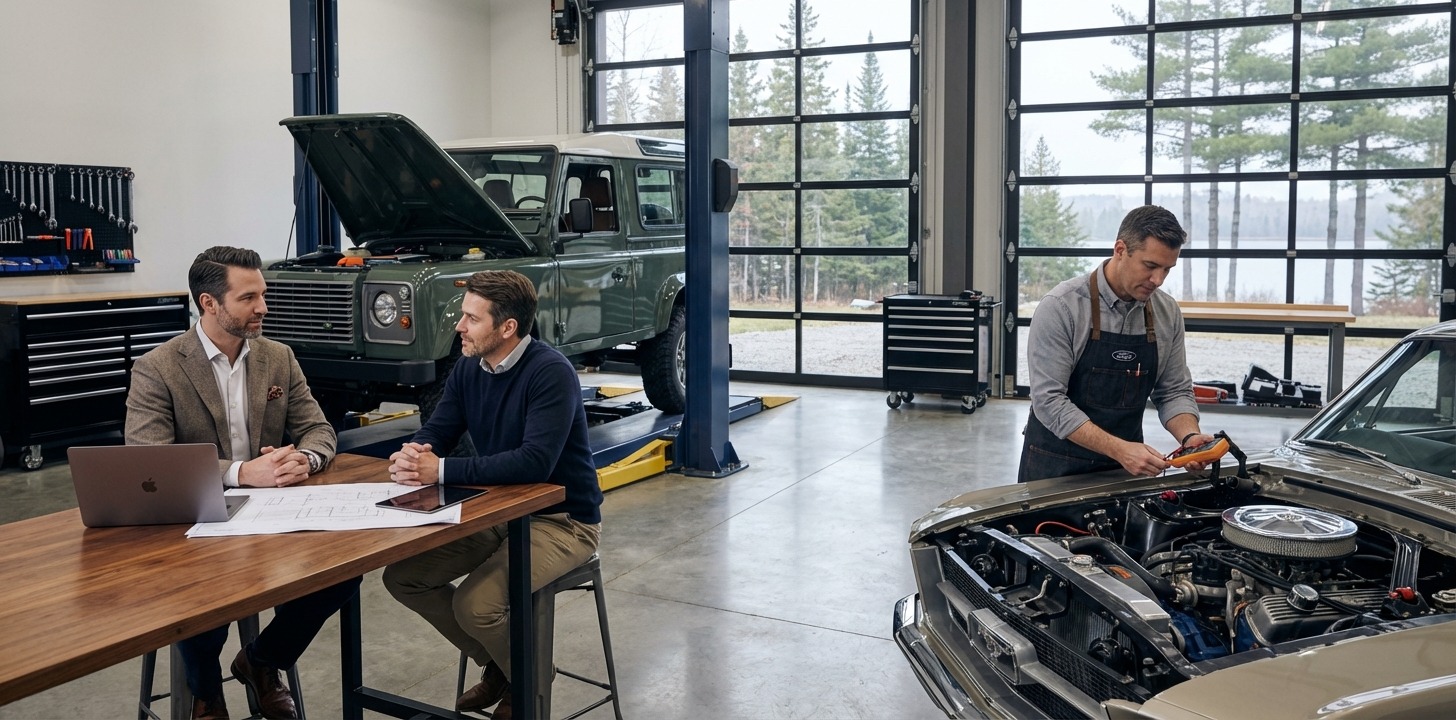
Customer guidance and consultation at Silent Classics
Model-Specific Guides

Questions About a Specific Car?

We have dedicated pages for our most popular conversion platforms, including detailed specs, build considerations, and what makes each model special.

Ford Mustang

The first-generation Mustang is one of our most popular and most rewarding platforms to electrify. Lightweight, rear-wheel drive, and endlessly iconic.

Mustang conversions

Land Rover Defender

Built to go anywhere, the Defender gains even more low-end torque from an electric motor while shedding its notoriously thirsty fuel habit.

Land Rover conversions

Classic Pickup Trucks

Generous engine bays and sturdy frames make classic trucks ideal candidates for larger battery packs and impressive electric range.

Pickup conversions
We Are Here to Help

Still Have Questions?

If you did not find the answer you were looking for, we would love to hear from you. Our team is available to discuss your specific vehicle, answer technical questions, and help you understand whether an EV conversion is the right choice for your car.

You can reach us by phone, email, or through our contact form. If you are ready to move beyond questions and into action, our Start Your Build form is the fastest way to get a personalized consultation and estimate.

Customer guidance and consultation at Silent Classics

Ready to Begin?

You have the answers. Now let us build the car. Tell us about your classic and we will create a conversion plan tailored to your vision.